
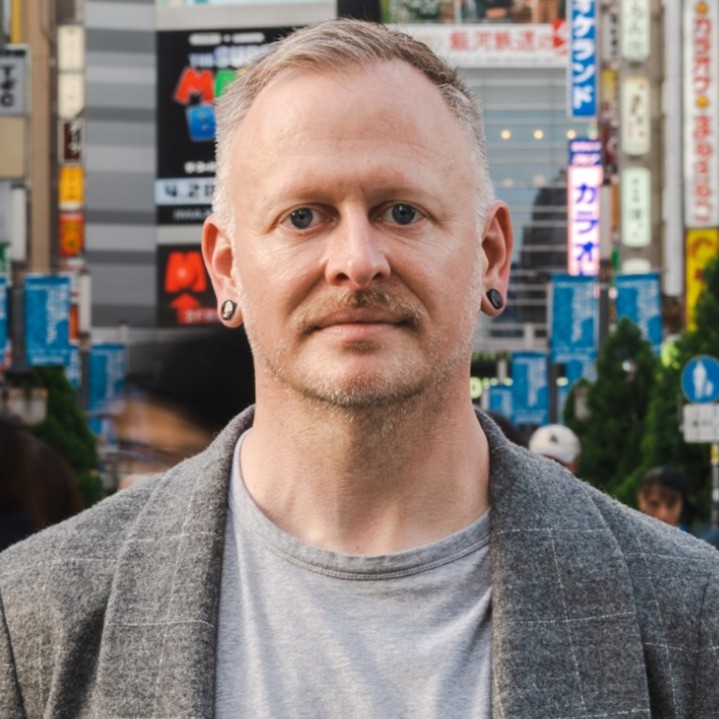
Josh LaMar
Josh LaMar is CEO and Co-Founder of Amplinate, an international research and design agency specializing in cross-cultural insights.

November 11 @ 5:00 pm – 5:20 pm GMT

Good art holds a mirror up to humanity. Now, AI holds one up to our research: synthetic respondents, digital twins, and simulated interviews. But the mirror is cracked. Trained on the average, it reflects the centre whilst losing the edges. The anomaly, the contradiction, and the uncomfortable question that ultimately changes the brief.
More importantly, there is a second mirror we’re worse at using: the one we hold up to our own past. Time and again, tech revolution made the same three mistakes. First, we built for scale before we understood the human. We confused the medium for the message. We ignored the warnings until they became a crisis. But the record is complete, from the internal warnings at Google in 2013, to MIT’s finding that 95% of organisations are getting zero return on $30–40 billion of AI investment. That glass is fine. The crack is in the looking..
This session introduces The Three Mirrors: a diagnostic framework of three questions that force us to check both reflections. What AI can’t show us, and what we’ve been refusing to see. It closes with a practical model for hybrid qualitative work. Where AI delivers speed and scale, as well as human judgment, which makes it meaningful.
Key Takeaways: