incling
incling is a qualitative research platform with expert services for building and managing online insight communities in over 27 languages

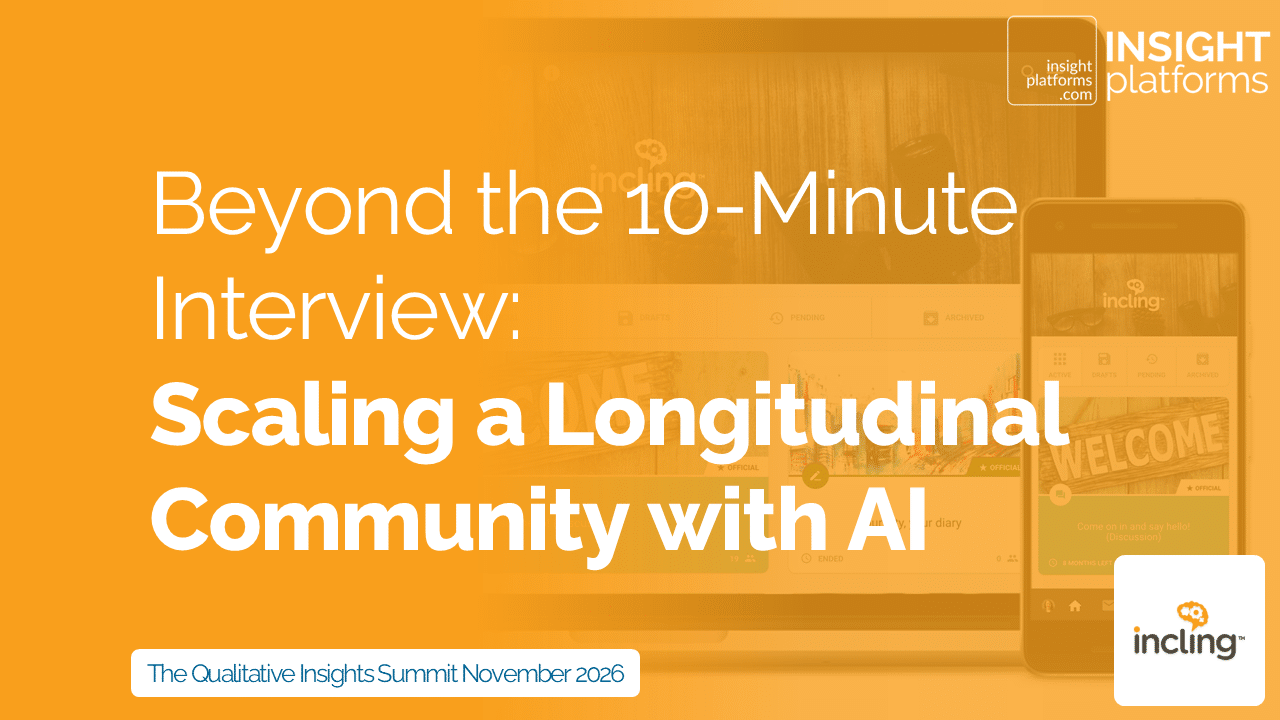
AI for longitudinal qualitative research can help teams manage ongoing participant contributions while researchers guide moderation and interpret findings. In this webinar, Glen Tooke of incling and Sarah Gorman of Sparkminds, discuss a 14-week community.
Their case study explores AI-assisted follow-up, the instructions and safeguards needed for a sensitive research topic, and the continuing role of human researchers.
The challenge of moderating a 14-week community
Sarah describes a study of 55 lottery players who posted about what they saw and when they played, alongside other research tasks. Contributions could arrive at any hour, making timely probing and sustained engagement difficult to manage manually.
How the AI moderator responded to posts
Glen explains how the team used task-specific instructions to vary tone, direct follow-up questions and control probing. He reports 16,000 posts reviewed and 7,000 probed, and shares the team’s estimates of additional content and moderation time saved.
Client impact and the researcher’s role
Sarah describes how routine follow-up supported deeper responses and gave her more time to consider findings. She says she still read content and stepped in with her own questions where appropriate.
Lessons in prompts, repetition and priorities
The speakers discuss testing instructions, avoiding repetitive thanks, recognising when further probing is unlikely to help and ordering priorities. Glen describes a separate example where contradictory instructions led to unexpected questioning.
Disclosure, client concerns and sensitive responses
The speakers explain how they disclosed the AI moderator, addressed the client’s initial questions and monitored its behaviour. Sarah describes switching AI moderation off for an introductory task where participants might share unexpected personal information.
Glen Tooke leads the growth team at incling, a research technology agency. He explains the AI moderation approach and the team’s lessons from the project.
Sarah Gorman is a researcher at independent research agency Sparkminds. She describes the research brief, moderating the community and interpreting its findings.